

- This event has passed.
Bridging the Gap! Transitioning from MPRE to Real-World Ethics
Ethics is a code of conduct, but what is ethically required may be wrong. As law students move beyond the Multistate Professional Responsibility Examination (MPRE) and begin to transition into real-world practice, this panel offers practical insight into how ethical principles apply in everyday legal settings.
Whether you are in the midst of an internship, clinic, in the early years of practice or an experienced practitioner, ethical issues will inevitably arise. Most ethics violations are routine, preventable, and rooted in poor judgment—not bad intent.This panel will explore common ethical challenges faced by attorneys, including client communication, supervision and delegation, conflicts of interest, confidentiality and maintaining professionalism under pressure, illustrating how these issues arise in practice. By the end of the session, participants will be prepared to move beyond just memorizing and restating rules and will instead be able to apply ethical reasoning in ambiguous situations by developing a personal framework for ethical decision-making.
Strong leadership in the legal profession is grounded not just in knowledge of the law, but in the ability to navigate complex ethical challenges with sound judgment and integrity.
Key Takeaways
- A lawyer’s reputation is one of their most valuable assets. It serves as a foundation for leadership, professional success, and the integrity of the legal profession as a whole.
- Ethics is an ongoing professional responsibility. Ethical competence requires a commitment to lifelong learning, and attorneys have a responsibility to stay informed about evolving professional standards.
- Seeking guidance is a sign of professionalism, not weakness. Consulting supervisors, mentors, ethics counsel, and other resources can help prevent ethical mistakes.
CLE Information
1.5 Credits in Ethics and Professionalism
Transitional/Non-Transitional
Speakers:
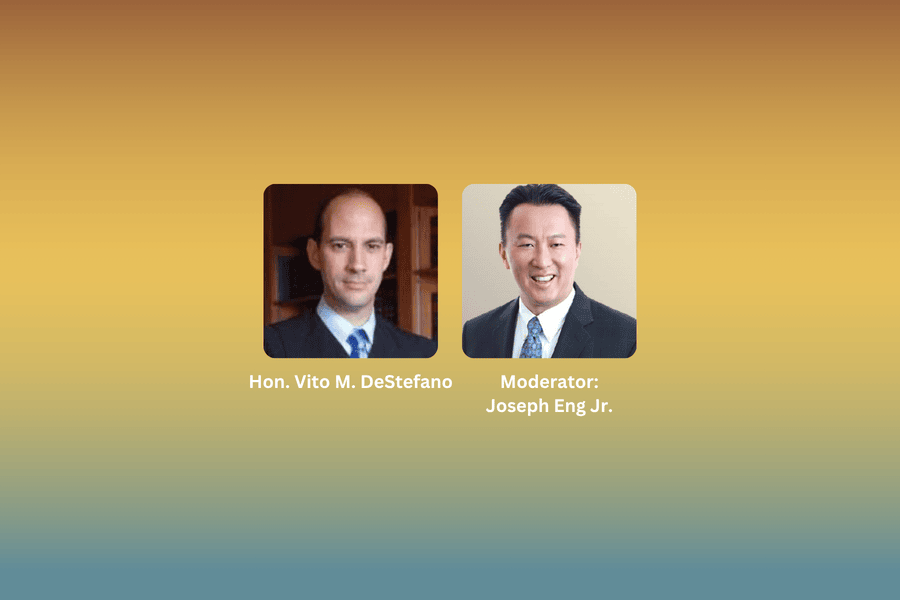
- Hon. Vito M. DeStefano, Justice, New York State Supreme Court; Administrative Judge, 10th Judicial District, Nassau County
Moderator:
- Joseph Eng Jr., Partner, King & Spalding’s Intellectual Property Group; Board Director, AABANY; Co-Chair, Student Outreach Committee.